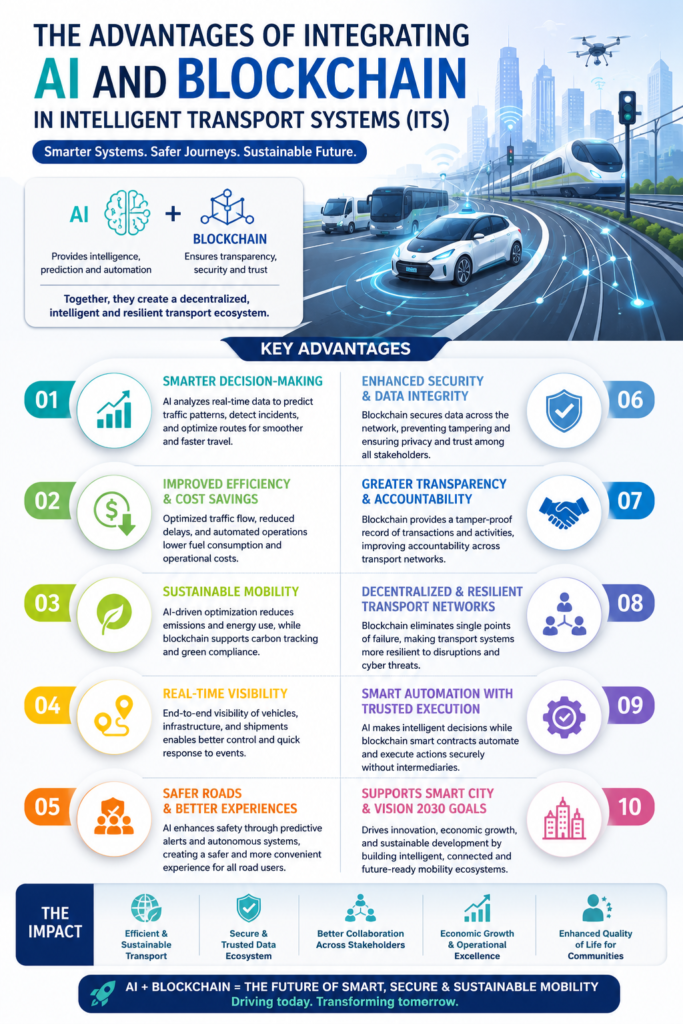
As cities grow and transportation networks become increasingly complex, the demand for smarter, safer, and more sustainable mobility solutions continues to rise. Intelligent Transport Systems (ITS) are at the forefront of this transformation, leveraging advanced technologies to improve traffic management, enhance passenger experiences, and optimize logistics operations. Among the most promising innovations shaping the future of smart mobility are Artificial Intelligence (AI) and Blockchain.
Artificial Intelligence is revolutionizing transportation by enabling real-time data analysis, predictive decision-making, and automation. AI-powered ITS platforms can analyze traffic patterns, predict congestion, optimize routes, and improve fleet utilization. Through machine learning algorithms, transportation systems can adapt dynamically to changing conditions, reducing travel times, fuel consumption, and environmental impact. AI is also playing a critical role in supporting autonomous vehicles, smart traffic signals, and predictive maintenance of transport infrastructure.
Blockchain technology complements these capabilities by introducing transparency, security, and trust into transportation ecosystems. As a decentralized digital ledger, Blockchain enables secure data sharing among multiple stakeholders without relying on a central authority. In Intelligent Transport Systems, Blockchain can facilitate secure vehicle-to-vehicle communication, streamline digital payments, automate transactions through smart contracts, and improve the traceability of goods across logistics networks.
The integration of AI and Blockchain creates a powerful foundation for next-generation mobility solutions. While AI provides intelligence and automation, Blockchain ensures data integrity and trust. Together, they enable decentralized transportation networks capable of making autonomous decisions while maintaining secure and transparent operations.
Beyond urban mobility, these technologies offer significant opportunities for freight transportation and multi-modal logistics. Real-time shipment tracking, predictive route optimization, automated customs processes, and secure logistics transactions can help improve efficiency across air, land, and sea transport networks.
As governments worldwide invest in smart city initiatives and sustainable transportation infrastructure, the convergence of AI and Blockchain is expected to play a pivotal role in shaping future mobility ecosystems. For countries pursuing ambitious transformation agendas, such as Saudi Arabia’s Vision 2030, these technologies represent a strategic opportunity to build intelligent, resilient, and globally competitive transportation networks that support economic growth and sustainable development.