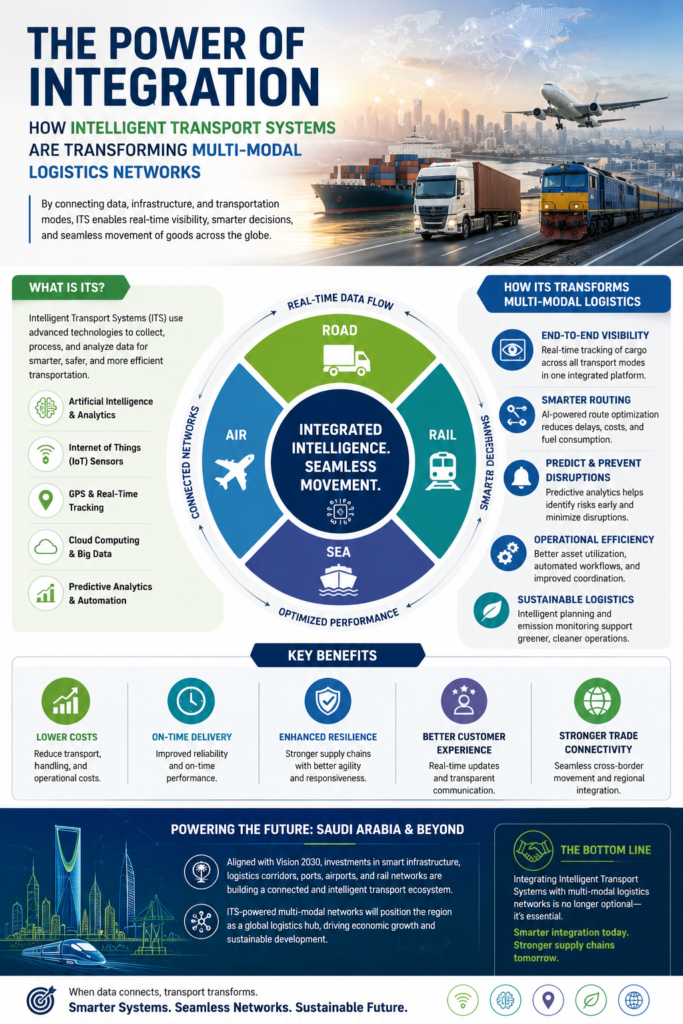
In today’s fast-paced global economy, efficient transportation and logistics have become critical drivers of business success. As supply chains grow increasingly complex, organizations are turning to Intelligent Transport Systems (ITS) to enhance visibility, connectivity, and operational performance across multi-modal logistics networks.
Multi-modal logistics involves the seamless movement of goods using multiple transportation modes, including road, rail, air, and sea. While this approach offers flexibility and efficiency, coordinating these interconnected transport systems can be challenging without access to accurate, real-time information. This is where Intelligent Transport Systems are making a significant impact.
ITS combines advanced technologies such as Artificial Intelligence (AI), Internet of Things (IoT), GPS tracking, cloud computing, and predictive analytics to create smarter transportation ecosystems. By integrating these technologies into logistics operations, organizations gain end-to-end visibility of cargo movements, fleet performance, and transportation infrastructure.
One of the greatest advantages of ITS is its ability to provide real-time decision-making capabilities. Transport operators can monitor traffic conditions, predict disruptions, optimize routes, and coordinate shipments across different transport modes from a centralized platform. This reduces delays, improves asset utilization, lowers fuel consumption, and enhances overall supply chain resilience.
The integration of ITS also supports sustainability objectives. Through intelligent route planning, congestion management, and predictive maintenance, organizations can significantly reduce emissions and improve environmental performance. As governments and industries increasingly prioritize sustainable logistics practices, ITS serves as a key enabler of greener transportation networks.
For Saudi Arabia and the wider GCC region, the collaboration between ITS and multi-modal logistics networks aligns closely with national transformation strategies. Investments in smart cities, digital infrastructure, ports, airports, railways, and logistics corridors are creating new opportunities to build connected and intelligent transport ecosystems. These developments support economic diversification, strengthen regional trade connectivity, and position the region as a global logistics hub.
As supply chains continue to evolve, the integration of Intelligent Transport Systems with multi-modal logistics networks will play an increasingly important role in shaping the future of transportation. Organizations that embrace this digital transformation today will be better positioned to achieve operational excellence, enhance customer service, and remain competitive in tomorrow’s connected world.